A Money Type profile
The Permission Trap
The math may say yes, but guilt asks for a full courtroom.
Published by Money Type | Methodology and limitations
What this pattern means
This pattern is about emotional permission. You may not be bad with money at all. The harder part is letting an affordable, aligned choice feel allowed without proving it over and over.
“Every purchase gets a trial, a defense lawyer, and a closing argument.”
Common signs
- You justify normal purchases
- Enjoyment can arrive with guilt
- You need a reason before money can feel usable
When healthy
- Pre-decides allowed categories
- Uses money without endless self-cross-examination
- Lets planned joy stay joyful
Under stress
- Overthinks small decisions
- Turns every purchase into a verdict
- Confuses guilt with wisdom
1. The Permission Trap in full
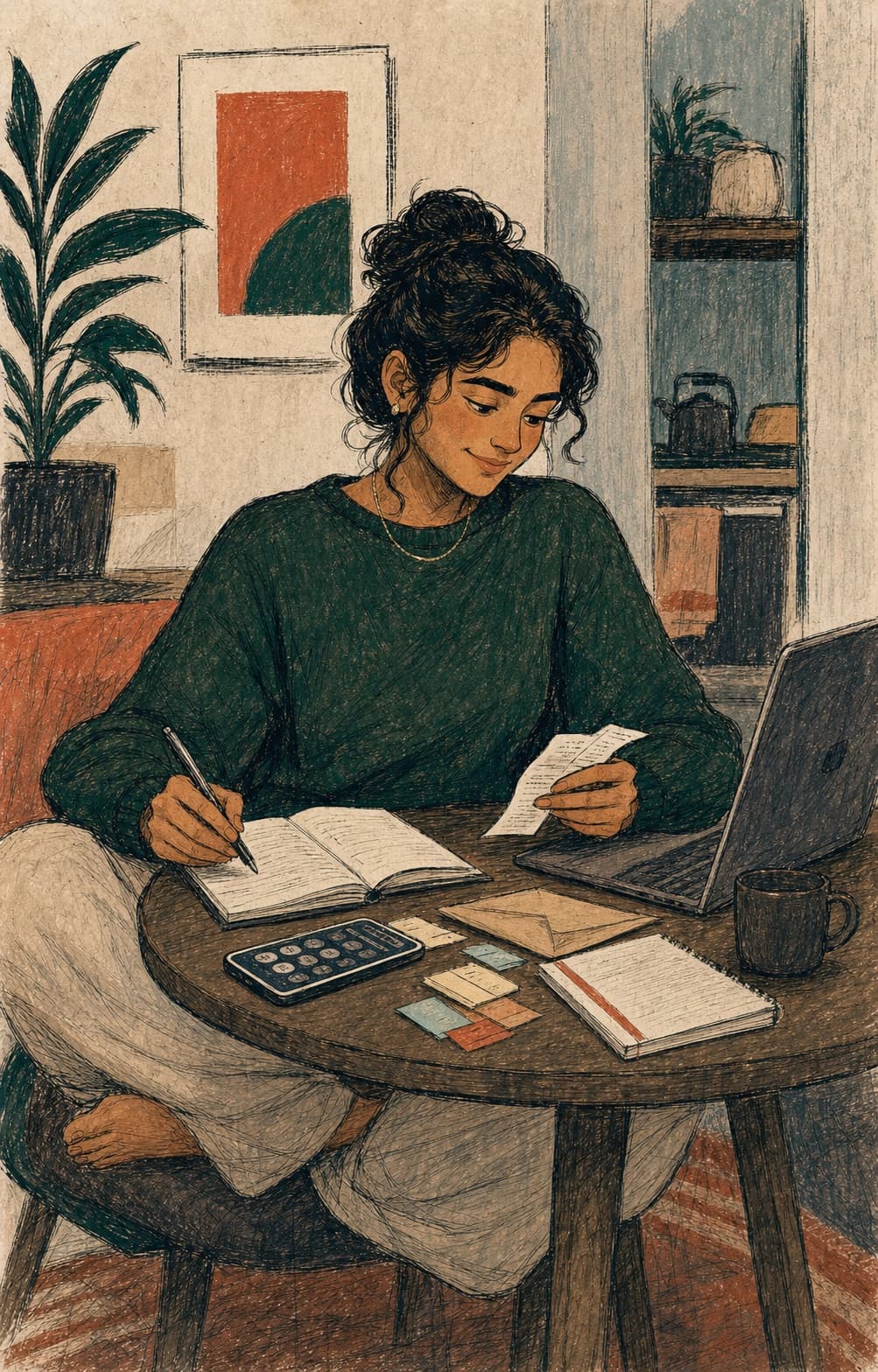
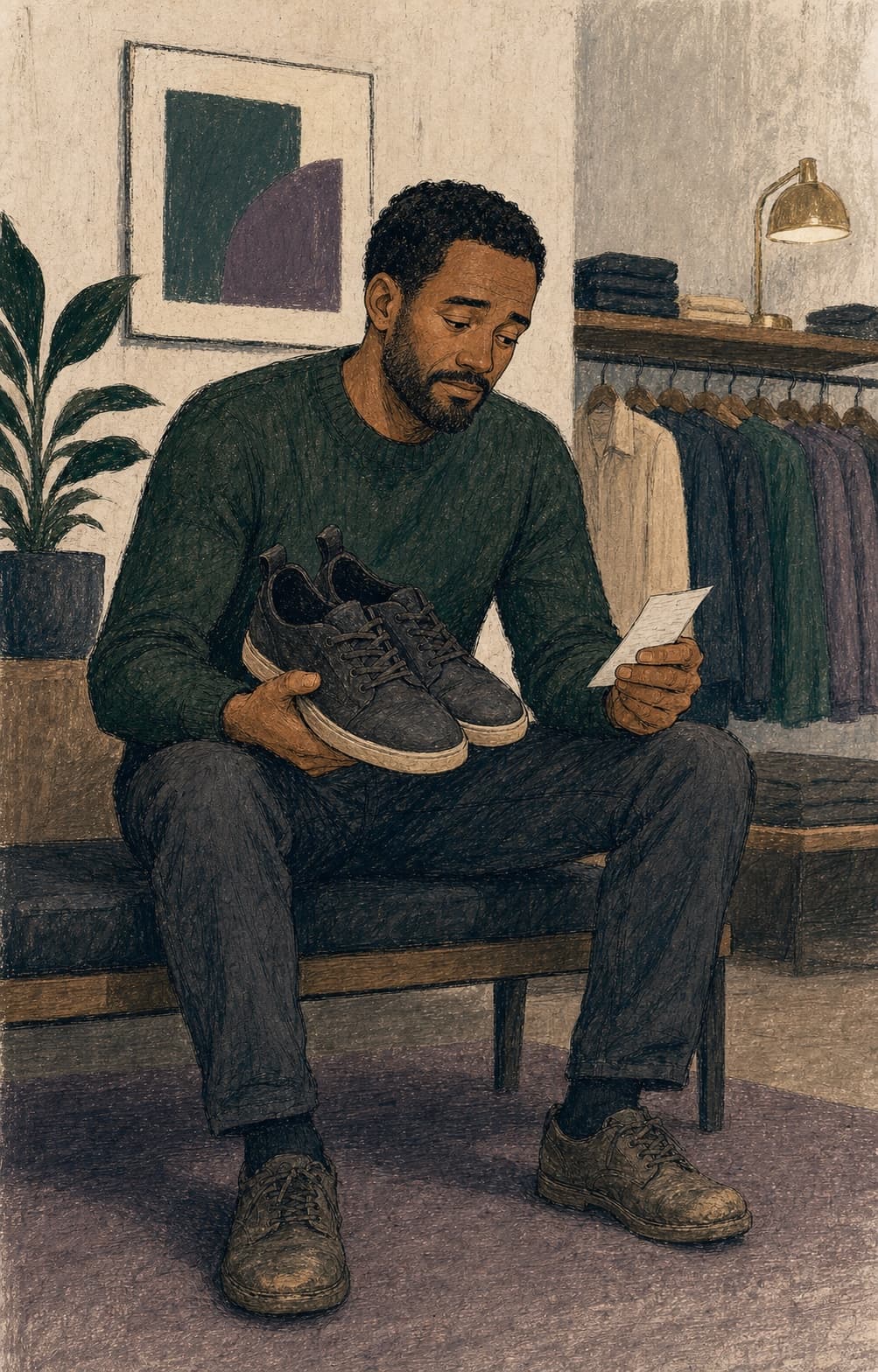
The tab has been open for eleven days. It's a jacket, or a standing desk, or a slightly nicer version of a thing you already own that's falling apart. You can afford it — you checked, twice — and yet the purchase sits there awaiting trial, and you keep showing up to court with new evidence: it's well-reviewed, it's on sale, your old one has a hole in it. The math said yes on day one. You're still deliberating on day eleven.
That's the Permission Trap in one scene: your emotional charge runs hotter than your numbers justify. This isn't a broke person's caution — your account balance is usually the least scary part of your financial life. The scary part is deciding you're allowed to use it. Somewhere along the way, spending became a moral event instead of a logistical one, and now every normal purchase needs a reason, a justification, a defense before it can feel legitimate.
As the site's roast goes: every purchase gets a trial, a defense lawyer, and a closing argument. The exhausting part is that you're playing every role — prosecutor, defense, judge, and the defendant sweating on the stand. This profile is about why the courtroom exists, what it's actually costing you, and how to start issuing verdicts that stick.
2. Where this pattern comes from
Most Permission Traps didn't invent this pattern — they inherited it. Maybe you grew up in a house where every purchase came with narration: why it was needed, why it was justified, why it was okay this time. Maybe money was genuinely tight for a stretch, and the rules that made sense then never got updated when the numbers changed. Or maybe spending on yourself was quietly framed as selfish, and being 'good with money' really meant 'wanting nothing.' Either way, old wiring is still running the room, and it's issuing rulings on your Tuesday coffee.
The tell is that your guilt doesn't scale with price — it scales with how justifiable the purchase feels. You can drop real money on something practical without flinching, then spiral for a week over a fraction of that on something that was just... nice. That's not a math problem. That's a permission system that only recognizes need as a valid reason, and treats want as a charge to be defended against.
Here's what makes it sticky: the guilt feels like virtue. Every time you agonize and don't buy, it reads as discipline. Every time you buy and feel bad, the bad feeling seems like proof you should've been more careful. The system rewards itself. But guilt is not wisdom — it's just loud — and confusing the two is the core error of your type.
3. Your money life, day to day
Your wishlist is not a wishlist. It's a holding cell where purchases await sentencing, some of them for years. You wait for sales not for the discount, but because 'it was 30% off' is admissible evidence. At restaurants your eyes find the cheapest reasonable option before you've read the menu, and it's not because you can't afford the good thing — it's because ordering it would require an explanation you haven't prepared.
Payday is weirdly anticlimactic for you. The money arrives, gets sorted responsibly, and produces zero feeling of abundance — because the arrival of money was never the issue. Meanwhile you'll screenshot a $40 item and send it to a friend with 'is this dumb?' — which is not really a question. It's a request for a character witness. You're building a case file for a purchase most people would make in the time it takes the page to load.
And when you do buy the thing? There's a decent chance the enjoyment arrives with a guilt chaser. You wear the jacket and hear a small voice ask if you really needed it. Some purchases you return not because they were wrong, but because the verdict got overturned on appeal at 11pm. You've paid full price for things and received about half the joy — the courtroom kept the rest as fees.
4. Strengths
Impulse Purchases Basically Can't Reach You
The chaos that wrecks other types — the 2am cart, the vibes-based checkout, the 'treat yourself' spiral — cannot get past your security. Nothing gets bought in your life without review, which means your defaults are quietly, deeply intentional. Marketers design entire funnels to trigger impulse, and your brain just files their urgency banner as inadmissible. It's a genuine moat, even if the moat is currently also keeping you out.
You Actually Know Your Numbers
The trial requires evidence, so you gather it. You know what things cost, what you have, and what the tradeoffs are — because you've never once bought something without checking. While other types are afraid to open the banking app, you've practically memorized it. That fluency is a real asset; most people would kill for your baseline awareness. Your problem was never information.
Your Big Decisions Are Rock Solid
The same deliberation that's absurd on a $15 purchase is exactly right on a $15,000 one. Cars, apartments, insurance, major commitments — you research, compare, sleep on it, and rarely get burned. You almost never experience the specific regret of 'why did I sign that.' When the stakes actually justify a trial, you're the best judge in the building.
People Trust You With Shared Money
Roommates, partners, group trips — nobody worries about you blowing the shared fund. Lifestyle inflation barely touches you, because a raise doesn't automatically translate into spending you'd have to justify. You're the person who returns the extra change, tracks who paid for what, and never quietly upgrades on someone else's dime. That reliability is worth naming, because you rarely credit yourself for it.
5. Struggles — and what they cost
The Verdict Never Sticks
You deliberate, decide, buy — and then re-open the case anyway. The post-purchase appeal process means you pay twice: once in money, once in rumination. This is the joy tax, and it's brutal: you paid full price for the thing and the guilt confiscated the pleasure. Over years, that's a lot of money spent and strangely little enjoyment received — which is the worst deal on the market.
Fourteen-Dollar Decisions Get Fourteen-Hundred-Dollar Attention
Your deliberation doesn't scale with stakes, so small purchases consume outrageous amounts of mental bandwidth. That's hours of your one life spent litigating a phone case. The cost isn't just time — it's decision fatigue that leaves you worse at the choices that actually matter. Under pressure, this gets louder: stress turns every checkout screen into a hearing.
The Deferred Life Adds Up
The good mattress, the trip while everyone's still healthy, the chair that would fix your back — permanently pending, awaiting a justification that never quite arrives. Meanwhile you buy the cheap version, it breaks, and you buy it again, which your own math should hate. The pattern costs you comfort, health, memories, and sometimes literal money. Waiting for permission has a price; it's just invisible on your statement.
You've Confused Guilt With Wisdom
Feeling bad about a purchase is not the same as the purchase being bad, but your nervous system files them identically. So you can't trust your own judgment — every 'yes' feels suspicious and every 'no' feels safe, regardless of the facts. That erodes self-trust in a way that leaks beyond money. When your alarm system fires on everything, you stop being able to hear real alarms.
Money Became Control Instead of Freedom
This is the core risk of your type, and it's worth saying plainly: the money is supposed to work for you, and instead you're working to stay acquitted in front of it. You have resources and you don't have the freedom they're supposed to buy — which means you've got the receipt but not the product. Nobody else is imposing this. The judge issuing all these rulings is you, which is the bad news and the good news.
Reading yourself into this page?
Take the free quiz — 50 questions, ~5 minutes — and see your exact score and pillar mix.
Find my Money Type6. Money & relationships
With a partner, you outsource permission. 'Should I get this?' sounds like a question, but it's really a request for a co-signer — if they say yes, the purchase has a witness and the guilt has to split the blame. It works until it doesn't: your partner gets tired of being the appeals court, and you never build the muscle of granting yourself the yes. Meanwhile, if your partner spends freely, their ease can read to your nervous system as recklessness even when the budget is fine — and that quiet flinch, repeated enough times, starts to feel like judgment to them.
With friends, you're the careful one at the split-the-bill dinner — quietly under-ordering, then paying an even split for other people's cocktails without complaint, because objecting would require defending yourself and you only run defenses for purchases. You may also assume everyone's auditing your spending the way you audit your own. They're not. Nobody at that table noticed what you ordered. The courtroom is not, and never was, public.
Here's the tell that gives your whole type away: you're generous with everyone but yourself. You'll buy a thoughtful gift for a friend without a second of deliberation — spending on others needs no permission slip, because it doesn't trigger the deserving question. Family can be more complicated, especially if that's where the wiring came from. A parent's offhand comment about money can reopen cases you thought were closed years ago.
7. Money & work
Negotiation is where the Permission Trap gets expensive, because asking for money feels like asking for permission — and you don't grant yourself permission easily, so why would a boss? You show up to raise conversations with a dossier of evidence when the market rate alone was a sufficient argument. If you freelance, you undercharge, over-deliver, and hesitate before sending invoices for work you already did. The pattern that puts a $40 purchase on trial also puts your own value on trial, and the settlement always comes in low.
You're likely a steady, reliable earner — the same wiring that reviews every purchase also shows up prepared, doesn't burn bridges, and doesn't make erratic career bets. But spending on your own advancement gets stuck in committee: the course, the conference, the certification, the laptop that isn't held together by hope. Each one needs a business case with projected ROI before you'll approve it, so you approve almost none of it. Investments in yourself are the hardest category, because 'I'm worth developing' is exactly the kind of claim your inner prosecutor loves to challenge.
And when the money does come — the raise, the bonus, the good year — it doesn't land. It gets routed responsibly into savings and produces no felt change in your life, because feeling the win would require permission you didn't file for. This is the alignment split at the heart of your type: your situation improves on paper while your lived experience stays exactly the same. Earning more was never going to fix that. Only the permission system can.
8. The growth path
Setup over willpower — every step changes the environment, not the person.
1Build a No-Questions Fund
Open a separate account and auto-transfer a fixed amount every payday — this is money that has already been tried, convicted of being spendable, and released. The decision happened once, in advance, when you set up the transfer. Anything bought from this account is pre-approved by definition, and the courtroom has no jurisdiction there. Start with an amount small enough that even your inner prosecutor shrugs. You can raise it later; the point is establishing that pre-approved money exists.
2Set a Deliberation Floor
Pick a number — say, $25 — below which deliberation is banned. Not discouraged: banned. If it's under the floor and you want it, you buy it, and the rule takes the blame. This works because you respect rules more than you respect your own wants, so let a rule do the permitting. You're not becoming reckless; you're capping the attention a decision is allowed to consume at something proportional to its stakes.
3One Trial, One Appeal, Then Done
For bigger purchases, give yourself exactly one deliberation session — write the decision down, along with why. Then allow one appeal window of 48 hours. After that, the verdict is final and re-opening the case is against the rules. Writing it down matters: when the 11pm guilt shows up, you point it to the file. The case was heard. Court's closed.
4Pre-Decide Categories, Not Purchases
Once a year, decide what kinds of spending are simply allowed in your life: books, one good trip, gear for the hobby you actually do, whatever's true for you. Fund them like bills. Then individual purchases inside those categories don't need individual justification — the category was the decision. This is the whole upgrade direction for your type: move the permission decision upstream, make it once, and stop relitigating it at every checkout screen.
5Swap the Question
The question 'do I deserve this?' is unanswerable — that's why the trial never ends. Replace it with 'is this in the plan?' — a question with an actual answer. If it's in the plan, buy it and let the plan absorb the guilt. If it's not, add it to next month's plan or let it go, no character assessment required. You're not trying to feel deserving; you're making deserving irrelevant.
At its best
At your best, you've moved every permission decision upstream, and it shows. The no-questions money flows automatically, small purchases happen without a hearing, and your formidable deliberation is reserved for decisions that actually deserve it — where you're genuinely excellent. You buy the good chair, take the trip, and let planned joy stay joyful because the plan already said yes and you've learned to let a yes be final. The self-awareness that once fueled the prosecution now works for the defense: you know your numbers, you know your wiring, and you know the difference between guilt and information. Money, finally, is a tool in your hand instead of a judge on your bench.
First move
Write a simple permission rule: if the money is in this lane, spending it is not a failure.
9. Common questions
Is the Permission Trap just being frugal?+
No — and the difference matters. Frugal people spend less and genuinely enjoy it; the low spending matches their values and their peace. You spend reasonably and suffer anyway, agonizing before purchases and feeling guilty after. Frugality is a preference. The Permission Trap is a courtroom. If saving money felt good instead of merely acquitted, you'd be a different type.
Can a Permission Trap be good with money?+
You already are — mechanically, you're one of the strongest types on the board. You know your numbers, you don't do impulse damage, and your big decisions are solid. Your upgrade isn't financial, it's emotional: learning to use money without a trial. The gap between your bank account and your peace of mind is the whole assignment, and it's very closeable.
How is this different from the Scarcity Lock?+
The Scarcity Lock is afraid the money will run out — the fear is about supply, often earned through real scarcity. You're not worried about supply; you've checked, it's fine. You're worried about whether you're allowed to use it. The Scarcity Lock hoards against disaster; you withhold pending justification. Different fears, different fixes — theirs needs safety, yours needs pre-approved permission.
How do I stop feeling guilty after I buy things?+
Don't fight the guilt at checkout — you'll lose, it's had years of practice. Instead, make the decision before the store: pre-funded categories, a no-questions account, a deliberation floor, one written verdict per purchase. When guilt shows up afterward, treat it as a prompt to check the plan, not to re-try the case. Guilt argues with feelings and wins; it argues with an automation and has nothing to say.
The five-pillar lens
Defaults
What your money does automatically before you think.
Emotion
How much your nervous system drives money decisions.
Wiring
Whether old money lessons still run the room.
Pressure
What happens when money gets stressful.
Alignment
Whether your behavior matches your actual situation.
General profile vs your profile
This page explains the public pattern. Your account report goes deeper with your exact score, pillar mix, answer themes, and a plan based on your quiz responses.
A personalized report can identify which purchases trigger guilt and which ones are actually aligned.